News · Research Insights
A New Approach to Scoliosis Screening from Peking Union Medical College Hospital

Put on a monitoring suit and perform six movements: this could provide new clues for scoliosis screening. On October 30, a team from Peking Union Medical College Hospital, the University of Science and Technology Beijing, and other institutions published a study in Nature Communications. The researchers used flexible sensors to record deformation at the body surface and combined these signals with machine learning to identify scoliosis. In a cohort of 190 participants, identification accuracy reached 92.63% under leave-one-subject-out validation and 87.72% in testing at an independent center. The study offers a new approach to radiation-free screening, but it cannot yet replace diagnostic imaging, and its performance in long-term use still needs to be validated.
More precise screening should go hand in hand with more precise treatment. Should every child with scoliosis wear a brace for 22 hours a day? The “brace dose” framework proposes considering actual wear time, patterns of wear, and correction-related measures together.[1] A retrospective study of night-time bracing also found that factors such as age, curve type, and in-brace correction were associated with the risk of progression.[2] The question is therefore not just “How long was the brace worn?” but also “What treatment was actually received?” This framework requires further validation and should not be treated as a clinical tool that can already calculate the optimal wear time automatically.[1]
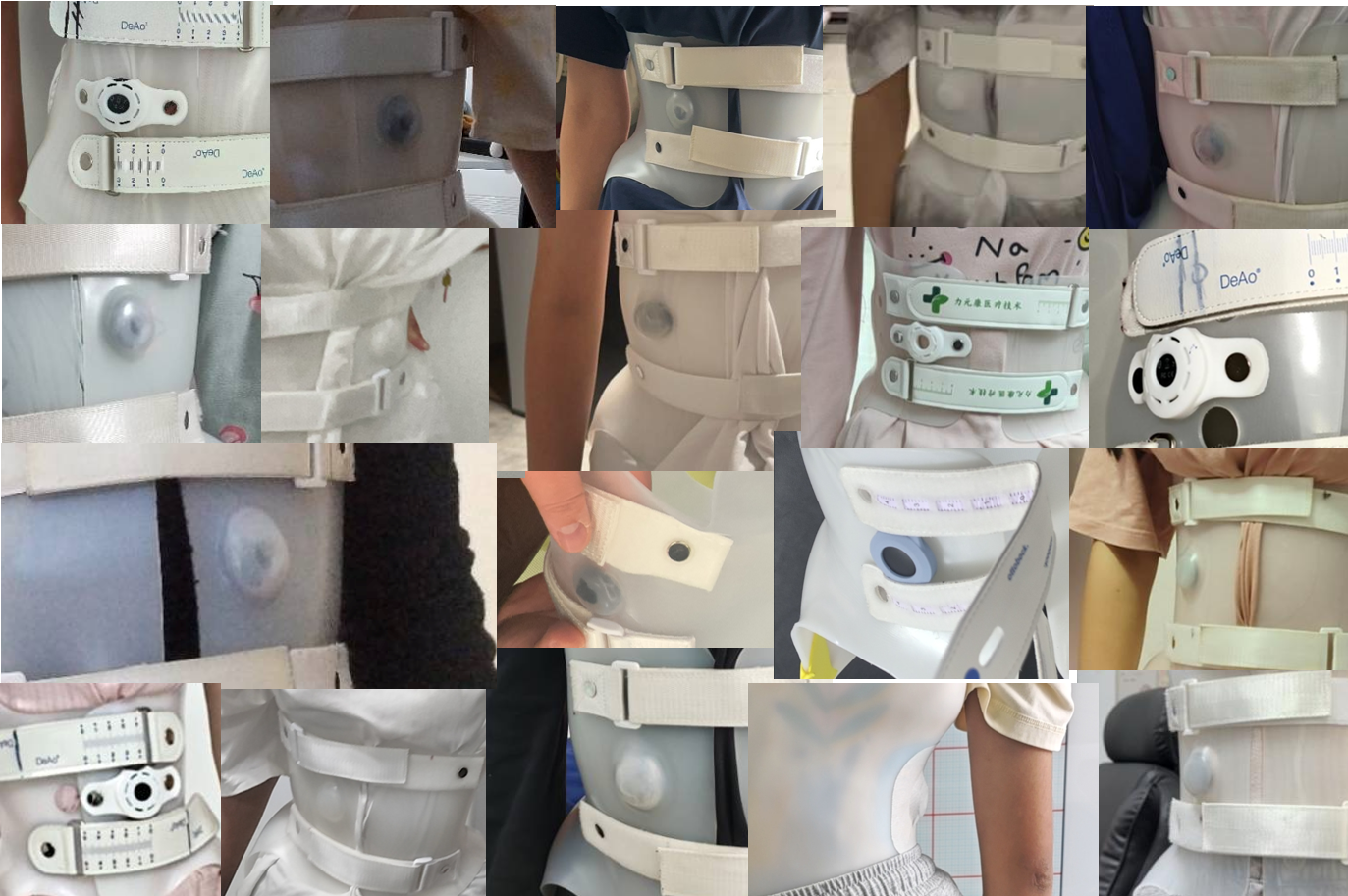
BraceSense solutions build on seven years of research and development at Hudian Data Technology. They aim to let the data speak, using wear records to move brace dose from concept toward validation and to explore the possibility of improving wear efficiency and reducing unnecessary wear time. Achieving this goal requires clinical evidence; the prescribed wear time must still be determined by a doctor.
References
Study discussed: Original paper in Nature Communications
- Besharaty S, Sheikhalishahi S, Jafarinasab H. Brace Dose in Scoliosis: Measurement, Monitoring, and Clinical Decision-Making—A Narrative Review. Orthopedic Research and Reviews. 2026;18:608929. DOI: 10.2147/ORR.S608929. Read the paper
- Gross J, Ragborg L, Heegaard M, et al. Can curve characteristics predict severe progression in night-time bracing in adolescent idiopathic scoliosis? European Spine Journal. 2026. DOI: 10.1007/s00586-026-09884-3. Read the paper
Further reading: BraceSense Knowledge Base, Chapter 6