Knowledge of Brace Sensors · Review v2.0
Brace Sensors and "Brace Treatment Dose" in Adolescent Idiopathic Scoliosis: A Continuously Updated Review from bracesense.com (v2.0)
Contents — jump to a chapter
- Introduction: Does Bracing Work?
- Chapter 1: We All Overestimate How Long Kids Actually Wear the Brace
- Chapter 2: Can Sensors Change Doctors' Prescription of Brace Wear?
- Chapter 3: Can the Cobb Angle Still Define the Boundaries of Bracing?
- Chapter 4: SRS and SOSORT Updated the Research Guidelines—Are Treatment Guidelines Next?
- Chapter 5: Is the Sensor Just Recording—or Changing the Game of Scoliosis Care?
- Chapter 6: Does Every Patient Need the Same Brace Treatment Dose?
- Chapter 7: Temperature Sensors Are Here—But Can They Really Record "Brace Treatment Dose"?
- Closing: To Update Guidelines, First Record "Brace Treatment Dose"
- About the Author
- References
Introduction: Does Bracing Work?
In 2013, the New England Journal of Medicine published a landmark study that powerfully proved one thing: bracing works for adolescent idiopathic scoliosis (AIS)—and there is a clear dose-response relationship between wear time and treatment success. The more you wear it, the better it works. (Effects of Bracing in Adolescents with Idiopathic Scoliosis. The New England Journal of Medicine, 2013)
The evidence was so strong that the trial's Data and Safety Monitoring Board stopped it early—on ethical grounds—because continuing to withhold bracing from some patients was no longer justifiable.
The finding has since been widely cited. The scoliosis specialists at Nanjing Drum Tower Hospital, a hospital renowned for its adolescent scoliosis care, cited this landmark trial in their public educational videos. (https://www.bilibili.com/video/BV1cre9z9EJy?t=8.0)
The Scoliosis Research Society (SRS) also cites this study, recommending in its official brace manual that patients wear the brace 20 hours a day. (SRS Brace Manual — Compliance in Brace Wearing: https://www.srs.org/Files/Research/Manuals-and-Publications/SRS_Brace_wear_compliance.8.23.pdf)
Chapter 1: We All Overestimate How Long Kids Actually Wear the Brace
SRS recommends 20 hours a day. But do we really know how long a child actually wears it?
Back in 2008, a study published in the Journal of Pediatric Orthopaedics used temperature sensors to answer that question. Researchers fitted 124 adolescent patients with a Boston brace equipped with a temperature sensor, objectively recorded their real wear time, and asked physicians, orthotists, parents, and the patients themselves to estimate it. The result was striking: patients actually wore the brace only 47% of the prescribed time—yet physicians estimated 64%, orthotists 66%, parents 72%, and the patients themselves 75%. Everyone, without exception, overestimated. (Morton A, et al. J Pediatr Orthop. 2008;28(3):336-41, PMID 18362800)
That 2008 finding has since been confirmed by studies around the world. (Katz DE, et al. J Bone Joint Surg Am. 2010;92(6):1343-52, PMID 20516309; Miller DJ, et al. Spine. 2012;37(9):717-21, PMID 22517480; Rahman T, et al. J Child Orthop. 2015;9(5):365-9, PMID 26310101)
Chapter 2: Can Sensors Change Doctors' Prescription of Brace Wear?
Is "one-size-fits-all" wear time finally up for debate?
Could international guidelines change?
Traditionally, prescriptions demand long wear times—SRS recommends 20 hours a day. But almost no child achieves that; even the most compliant kids manage only 14–19 hours. (SRS Brace Manual: https://www.srs.org/Files/Research/Manuals-and-Publications/SRS_Brace_wear_compliance.8.23.pdf)
A 2010 study that used sensors to precisely record wear time found that kids who actually wore the brace more than 12 hours a day mostly saw no curve progression—while those prescribed 16 hours and those prescribed 23 hours actually wore it for nearly the same amount of time. Beyond 16 hours, extra wear adds very little. (Katz DE, et al. J Bone Joint Surg Am. 2010;92(6):1343-52, PMID 20516309)
A 2016 study showed something subtler: when doctors could see a child's actual wear data and discuss it with them, wear time went up—the data itself began to shape how doctors advised patients. (Karol LA, et al. J Bone Joint Surg Am. 2016;98(1):9-14, PMID 26738898)
And a 2024 randomized trial was even more direct: for kids with moderate curves who don't want full-time bracing, nighttime bracing alone controlled the curve in 76% of cases—versus just 53% with exercise alone. Shorter wear, still effective. (Charalampidis A, et al. JAMA Netw Open. 2024;7(1):e2352492, PMID 38285447)
Taken together, these studies point one way: if we can objectively and continuously record how much bracing each child actually receives, then the prescription itself—shouldn't it be tailored to the individual?
Chapter 3: Can the Cobb Angle Still Define the Boundaries of Bracing?
3.1 Must We Wait for 25°?
Traditionally, around 25° has been considered an important starting point for bracing. (Richards BS, et al. Spine. 2005;30(18):2068-75, PMID 16166897)
But for a child who is still growing fast and already at high risk of progression—why wait until the curve reaches 25°?
Recent research on patients with 15°–24° curves suggests that earlier bracing for certain high-risk patients may improve the odds of curve correction and reduce the risk of further progression. (Zapata KA, et al. JB JS Open Access. 2026;11(3):e26.00072, PMID 42389458)
So maybe the real question isn't just:
"How big is the curve now?"
but also:
"How likely is this child to keep progressing?"
In other words, 25° may still be an important reference—but it doesn't have to be the same starting line for everyone.
3.2 Must They Wear It All Day?
If "when to start" can vary by patient, the next question follows naturally:
Once bracing begins, does everyone really need the same daily wear time?
A 2024 randomized clinical trial found that for some patients with moderate AIS—especially those unwilling to accept full-time bracing—nighttime bracing can still deliver meaningful results. (Charalampidis A, et al. JAMA Netw Open. 2024;7(1):e2352492, PMID 38285447)
That doesn't mean "nights are enough" for everyone, and it doesn't undermine full-time bracing.
What it really raises is a different question:
Should bracing prescriptions move from a uniform "X hours a day" toward a dose tailored to each patient?
In other words, the question isn't only "did they wear it long enough?" but:
Who needs long wear time, and who can get enough benefit from less?
3.3 Beyond 40°–45°, Is Bracing Pointless?
Traditionally, once the Cobb angle reaches 40° or 45°, the conversation turns increasingly toward surgery.
But recent research suggests that for some patients—those with remaining growth, good in-brace correction, high adherence, or who refuse surgery—bracing may still have value.
That's not to say every large-curve patient should keep bracing.
The real point is:
40° or 45° isn't necessarily an absolute "past this line, it's useless" boundary.
These three lines of research together mean more than any single study:
The angle to start bracing is being re-examined. Daily wear time is being re-examined. The limits for large curves are being re-examined.
Chapter 4: SRS and SOSORT Updated the Research Guidelines—Are Treatment Guidelines Next?
In 2026, the SRS Comprehensive Care Committee and SOSORT jointly released a new bracing research consensus. What they updated wasn't the clinical guidance on "how many hours to wear" or "what angle to start"—but rather "how research should be designed and reported." The authors explicitly note these recommendations are for research only, not clinical best-practice guidelines. (SRS 2026 consensus, Spine Deformity, DOI 10.1007/s43390-026-01349-3, PMID 42384358)
But there's one important change buried in it: objective brace-wear monitoring is now formally part of the research framework. The consensus recommends that studies report objective adherence measures (such as temperature sensors)—because advances in technology have made reliable, objective monitoring tools possible. (SRS 2026 consensus)
The research guidelines are now asking for objective recording of real wear. So the next question: as this real "brace treatment dose" data grows more complete, will it push the clinical guidelines themselves to change?
Chapter 5: Is the Sensor Just Recording—or Changing the Game of Scoliosis Care?
Using temperature sensors to record brace wear time is nothing new—plenty of studies have shown that putting a sensor in a brace gives a far more objective picture of how long a child actually wears it. (Nicholson GP, et al. Spine. 2003;28(19):2243-50, PMID 14520038; Benish BM, et al. Spine. 2012;37(4):309-15, PMID 21540779)
But the catch is real: a temperature sensor measures ambient temperature, not wearing itself. Studies have found that ambient temperature, sensor placement, and threshold settings can all skew the judgment—especially when it's hot. (Gahleitner M, et al. Medicina. 2026, PMID 42654380; Nakayama K, et al. Spine Surg Relat Res. 2022;6(2):133-8, PMID 35478984)
So the real question is no longer "can we put a sensor in?" but "can we reliably know when a child is actually wearing the brace?"
That step matters, because once real wear time can be recorded continuously and objectively, the sensor is no longer just an adherence tracker—it lets doctors see the gap between prescription and reality, and bring that data back into the treatment conversation. That's the problem BraceSense set out to solve.
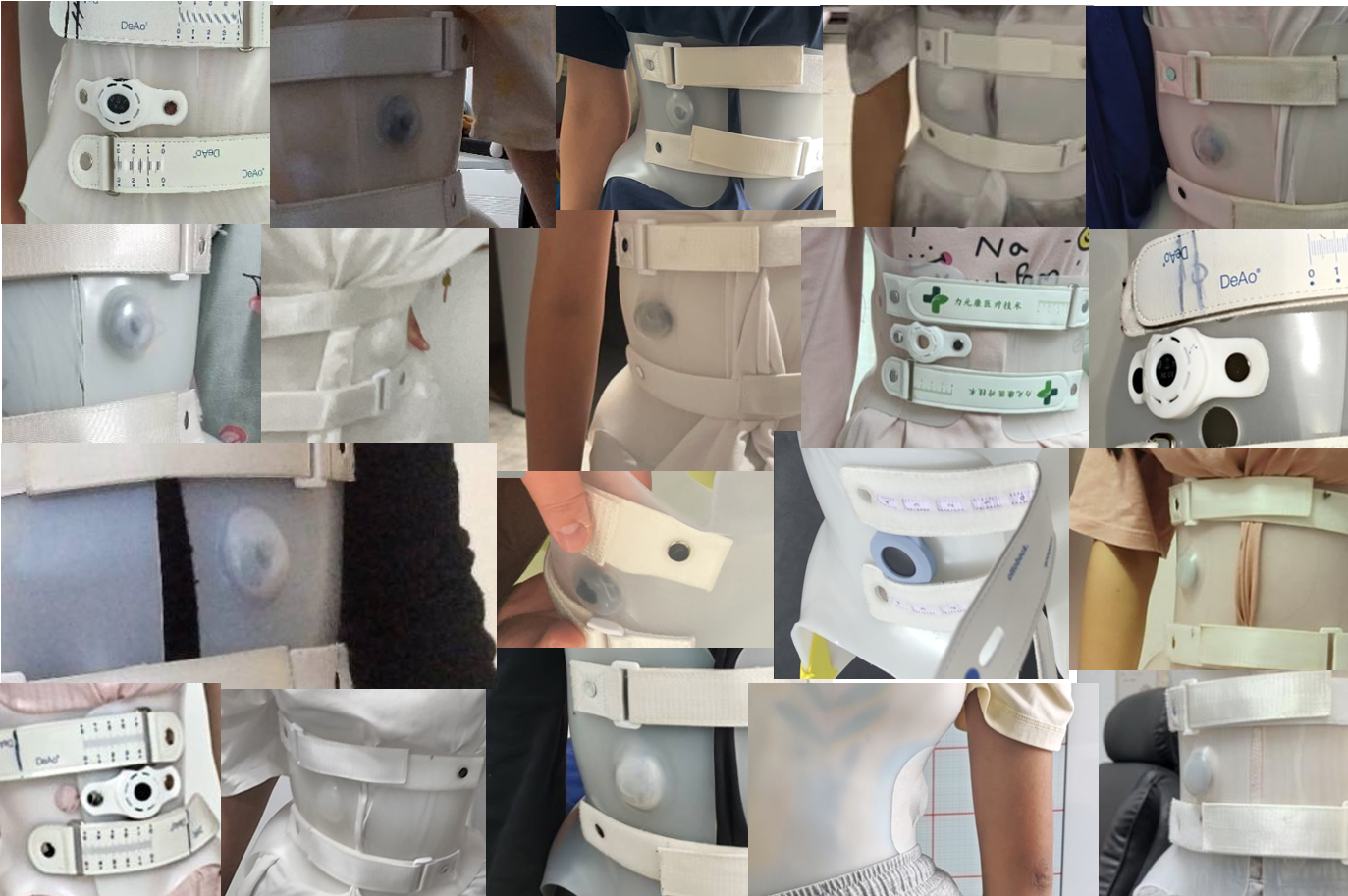
The next time a doctor sees a child, the question may no longer be "Did you wear it as long as I told you?" but "You wore it this long—how's it working? Do you still need to wear it that much next phase?"
That shift means the sensor is no longer just recording whether the last prescription was followed—it starts to shape the next one. That's the real change sensors may bring: moving scoliosis bracing from a fixed prescription toward data-driven, individualized adjustment. And that might be what truly changes the game.
Chapter 6: Does Every Patient Need the Same Brace Treatment Dose?
If two kids both wear their brace 16 hours a day—are they really receiving the same treatment?
Clearly, not necessarily. Bracing outcomes don't depend only on "how many hours"—they also depend on age, skeletal maturity, curve type, initial Cobb angle, in-brace correction, and more.
A 2026 nighttime-bracing study of 285 AIS patients found that even with similar nighttime treatment, progression risk differed markedly—younger patients, thoracic curves, and poorer in-brace correction were more likely to progress. (Gross J, Ragborg L, Ohrt-Nissen S, et al. Eur Spine J. 2026, PMID 41879837)
Another study found that age and the Cobb angle right after fitting significantly predicted brace failure. (Sasao S, Oba H, et al. Spine Deform. 2026;14(1):77-84, PMID 40944882)
And a 2026 systematic review and meta-analysis showed that adherence itself is shaped by age, BMI, and psychological and social factors—how much a patient can wear, and how much benefit they get from it, varies from person to person. (Sapienza M, et al. J Funct Morphol Kinesiol. 2026;11(1):68, PMID 41718196)
So maybe the question shouldn't be "how many hours does everyone wear?" but "how much dose does this child actually need?"
If we can continuously record real wear time, patient characteristics, and outcomes, bracing may gradually move from a uniform prescription toward truly individualized dosing.
Chapter 7: Temperature Sensors Are Here—But Can They Really Record "Brace Treatment Dose"?
Temperature sensors have truly entered long-term brace-wear monitoring. In 2026, a real-world study logged 6,892 monitoring days across 43 AIS patients: using 29°C as the wear threshold, the sensor found patients actually wore the brace about 9.22 hours a day on average—most at night, slightly less on weekends, with significant seasonal variation. (Gahleitner M, et al. Medicina. 2026;62(8):1484, PMID 42654380)
But how reliable is a temperature-based "worn or not" judgment? A Japanese team systematically tested it: placing temperature loggers at five positions on the brace and testing multiple thresholds, they found the smallest error at the abdomen with a 30°C threshold, reaching 97.9% ± 0.9% reliability. (Nakayama K, et al. Spine Surg Relat Res. 2022;6(2):133-8, PMID 35478984)
One detail matters most: reliability was 99.8% in April, but dropped to 97.9% in August—the hottest month. As the authors put it, "If the ambient temperature is almost the same as the skin temperature, the accuracy of the temperature logger decreases." Even with the best placement and threshold, the sensor's accuracy still answers to the weather.
So the honest summary: temperature sensing is a proven, clinically useful method—but its accuracy depends on placement, threshold, and environment, and even under ideal conditions it captures only time. It answers "worn or not, and how long"—not "what treatment was received." Bracing, clearly, is about more than time.
To talk about "brace treatment dose," simply logging "wore it 10 hours today" may not be enough—we also need to know: when did those 10 hours happen? Asleep or active? How did posture change? What outcomes followed?
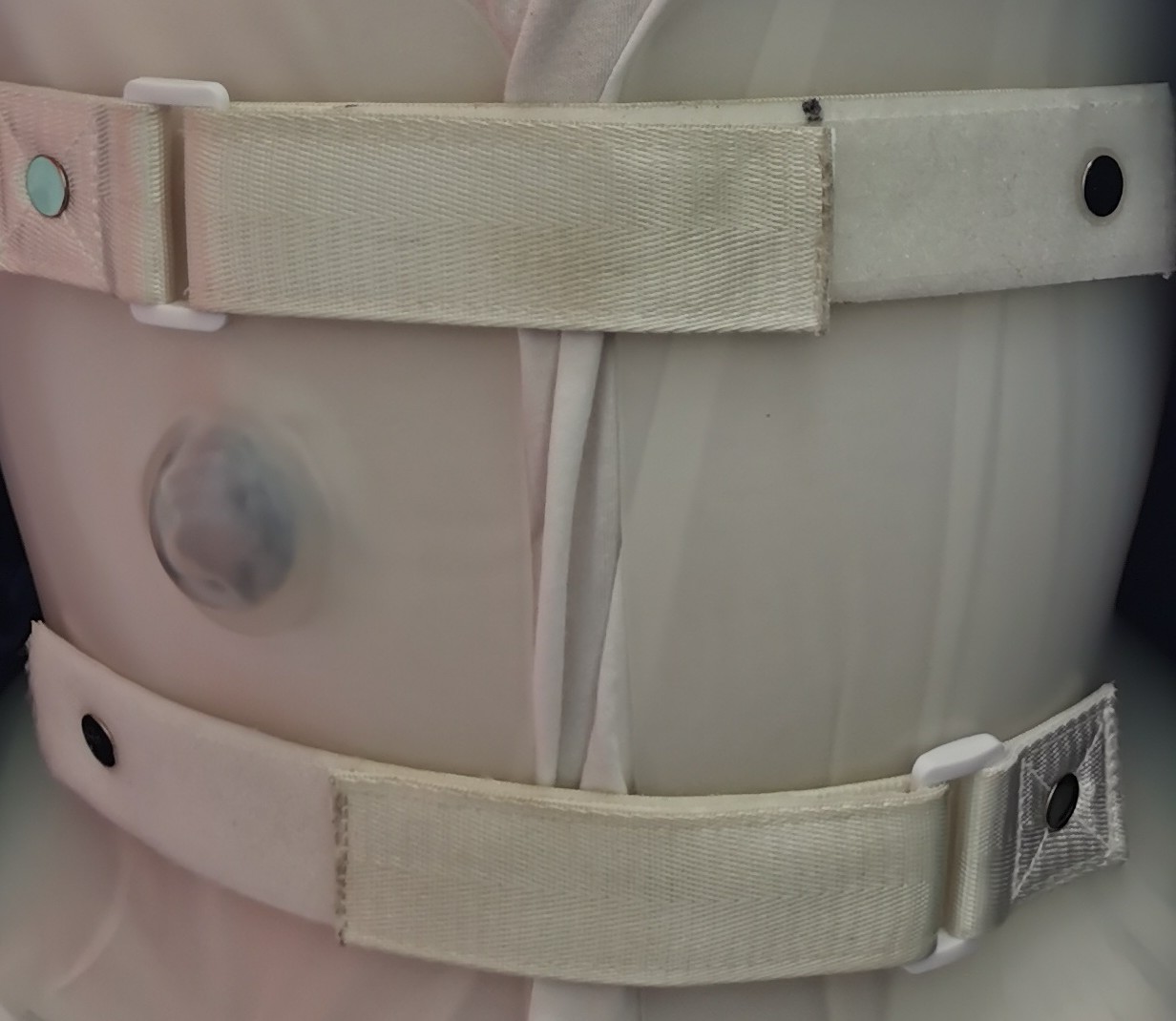
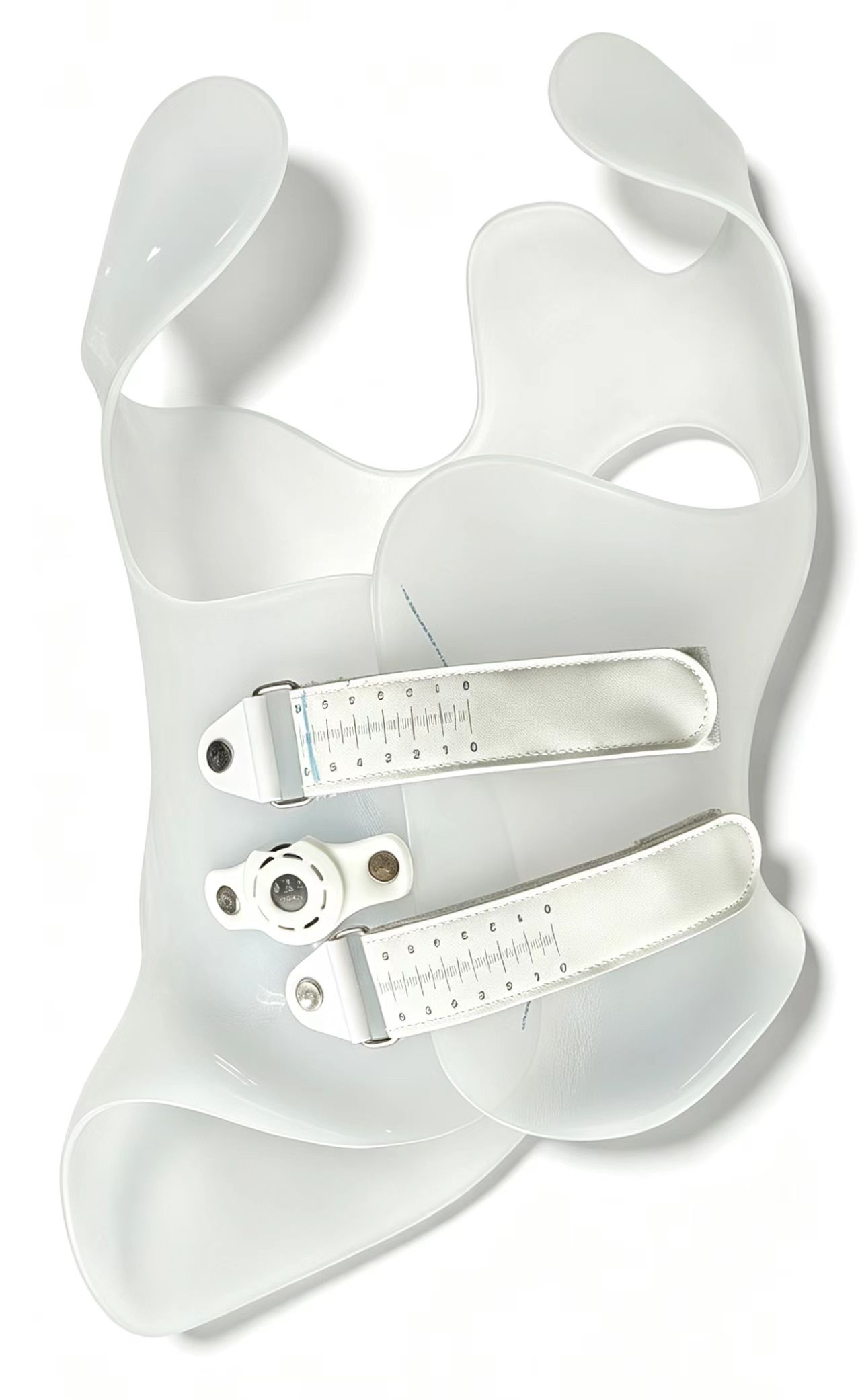
That's what BraceSense is doing: recording not just temperature, but the brace's posture changes and the patient's activity—so "10 hours of wear" is no longer an isolated number, but a treatment record with context. Where a temperature sensor relies on one threshold making one guess, multiple parameters can cross-verify each other—temperature, posture, and activity checking one another's answers—to produce a contextualized record rather than a binary guess.
Temperature sensors answered the first question: "How long did the patient wear it?"
The next generation of multi-dimensional sensors has to answer a bigger one: "What kind of bracing treatment did the patient actually receive during that time?"—and that's much closer to the "brace treatment dose" we've been discussing.
| Dimension | Temperature Sensor | BraceSense Sensor |
|---|---|---|
| Sensor | Single temperature sensor | Multiple sensors (temperature + posture + activity) |
| Judgment | One fixed threshold, one binary answer | Multi-parameter cross-validation |
| Accuracy | Proven and clinically useful, but sensitive to placement, threshold, season, and room temperature | Multi-parameter cross-validation; can record "brace treatment dose" |
| Application | Pre-installed only, on new braces | Pre-installed, or retro-fitted to already-fitted braces |
| Rehabilitation | Cannot reflect movement/rehab | Records nighttime posture and daytime activity; can reflect rehabilitation |
Closing: To Update Guidelines, First Record "Brace Treatment Dose"
If bracing is ever to move from a uniform prescription toward individualized treatment, the first step isn't debating how to adjust the prescription—it's knowing how much treatment the patient actually received. That's "brace treatment dose."
But as long as we can't yet pin down what bracing a patient truly received, any talk of dose optimization is premature.
The more realistic, more fundamental next step is to reliably and continuously record the dose of bracing each patient actually receives—something the research community is already calling for with standardized, objective adherence measures. (Sapienza M, et al. J Funct Morphol Kinesiol. 2026;11(1):68, PMID 41718196)
It may not sound glamorous, but it could be the foundation on which all future individualized prescriptions are built.
About the Author
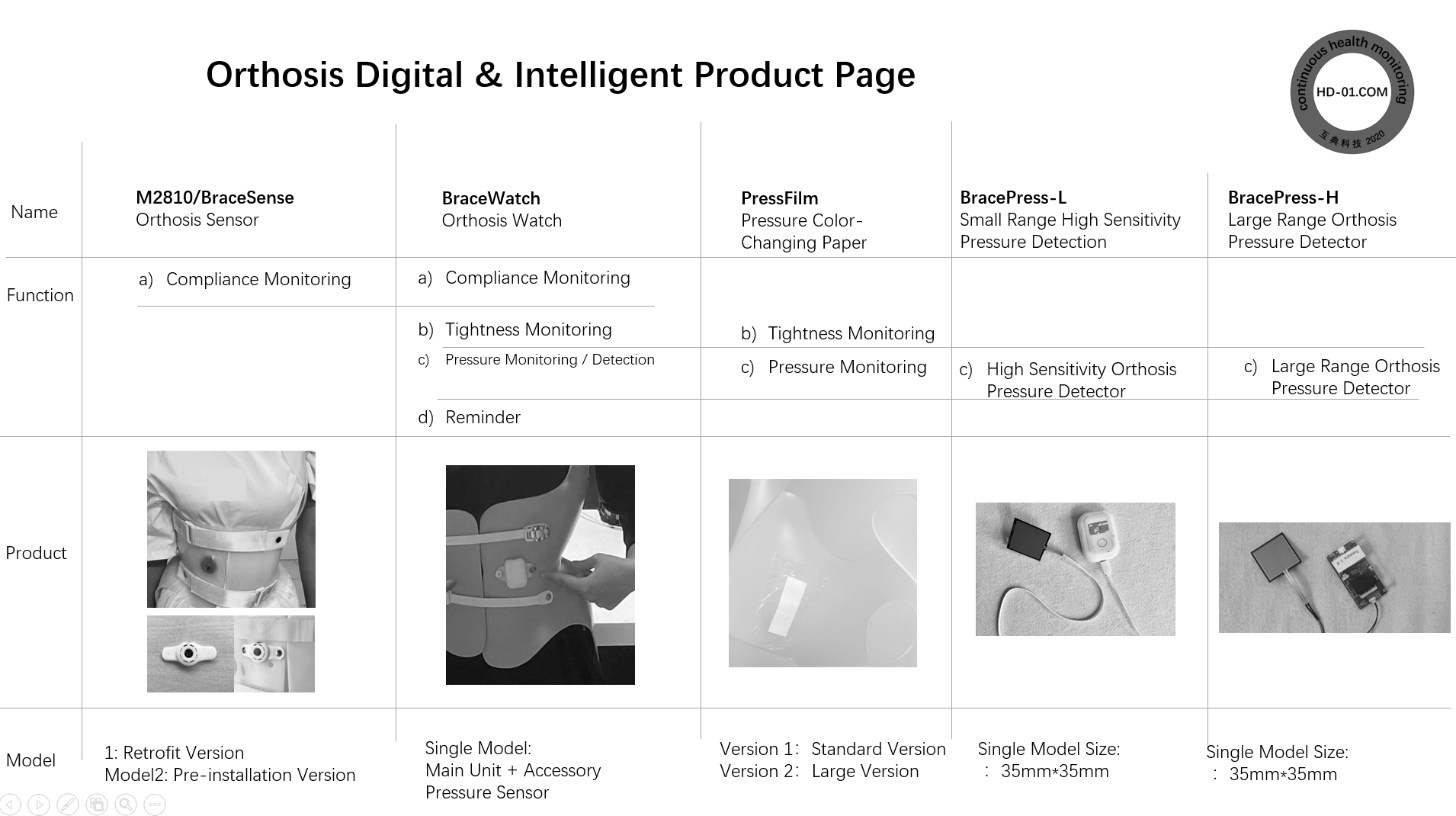
Cheng Zuwei is the General Manager of HD-01 Tech (Hudian Data Technology (Shanghai) Co., Ltd.), which provides brace sensor solutions for the orthotic treatment of adolescent idiopathic scoliosis. Its flagship product, BraceSense—a coin-sized sensor built on the LifeDot hardware platform—enables continuous, objective monitoring of "brace treatment dose" during bracing treatment.
Contact: czw@hd-01.com | Website: hd-01.com | Product: bracesense.com
References
- Weinstein SL, Dolan LA, Wright JG, Dobbs MB. Effects of bracing in adolescents with idiopathic scoliosis. N Engl J Med. 2013;369(16):1512-21.
- Morton A, et al. Accuracy in the prediction and estimation of adherence to bracewear before and during treatment of adolescent idiopathic scoliosis. J Pediatr Orthop. 2008;28(3):336-41.
- Katz DE, et al. Brace wear control of curve progression in adolescent idiopathic scoliosis. J Bone Joint Surg Am. 2010;92(6):1343-52.
- Miller DJ, et al. Electronic monitoring improves brace-wearing compliance in patients with adolescent idiopathic scoliosis: a randomized clinical trial. Spine. 2012;37(9):717-21.
- Rahman T, et al. Electronic monitoring of orthopedic brace compliance. J Child Orthop. 2015;9(5):365-9.
- Karol LA, et al. Effect of compliance counseling on brace use and success in patients with adolescent idiopathic scoliosis. J Bone Joint Surg Am. 2016;98(1):9-14.
- Richards BS, et al. Standardization of criteria for adolescent idiopathic scoliosis brace studies: SRS Committee on Bracing and Nonoperative Management. Spine. 2005;30(18):2068-75.
- Zapata KA, et al. Early brace treatment: the new standard for adolescent idiopathic scoliosis? JB JS Open Access. 2026;11(3):e26.00072.
- Charalampidis A, et al. Nighttime bracing or exercise in moderate-grade adolescent idiopathic scoliosis: a randomized clinical trial. JAMA Netw Open. 2024;7(1):e2352492.
- SRS 2026 bracing research consensus. Spine Deformity. 2026. doi:10.1007/s43390-026-01349-3.
- Nicholson GP, et al. The objective measurement of spinal orthosis use for the treatment of adolescent idiopathic scoliosis. Spine. 2003;28(19):2243-50.
- Benish BM, et al. Validation of a miniature thermochron for monitoring thoracolumbosacral orthosis wear time. Spine. 2012;37(4):309-15.
- Gahleitner M, et al. Limitations of a temperature sensor for measuring brace wear in patients with adolescent idiopathic scoliosis. Medicina (Kaunas). 2026;62(8):1484. PMID 42654380. doi:10.3390/medicina62081484.
- Gross J, Ragborg L, Ohrt-Nissen S, et al. Can curve characteristics predict severe progression in night-time bracing in adolescent idiopathic scoliosis? Eur Spine J. 2026.
- Sasao S, Oba H, et al. Age and in-brace Cobb angle predict brace failure in adolescent idiopathic scoliosis. Spine Deform. 2026;14(1):77-84.
- Sapienza M, et al. Clinical, psychological, and social determinants of brace compliance in adolescent idiopathic scoliosis: a systematic review and meta-analysis. J Funct Morphol Kinesiol. 2026;11(1):68.
- Nakayama K, Kotani T, Kimura H, et al. The optimal anatomical position and threshold temperature of a temperature data logger for brace-wearing compliance in patients with scoliosis. Spine Surg Relat Res. 2022;6(2):133-138. PMID 35478984. PMCID: PMC8995123. doi:10.22603/ssrr.2021-0062.